
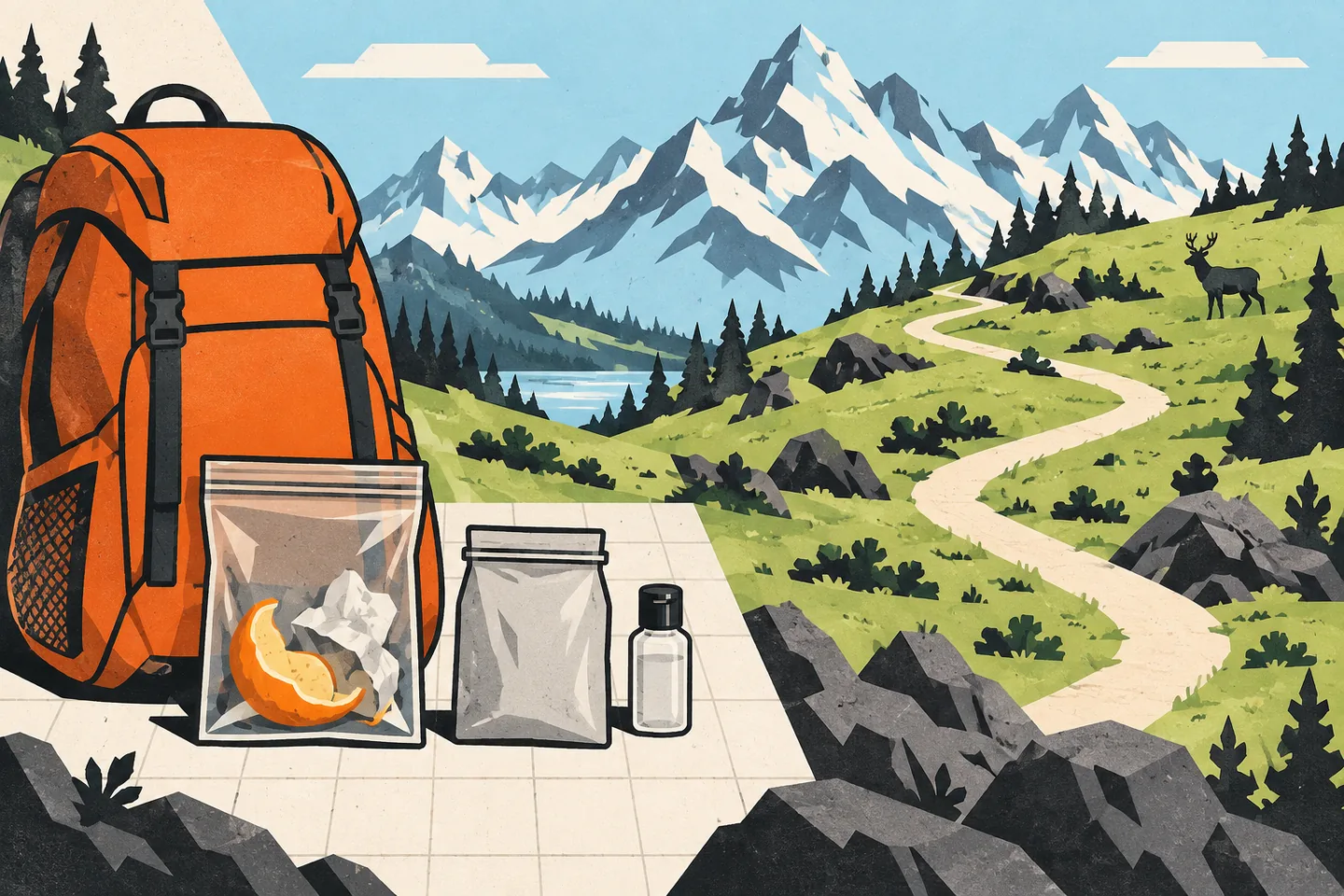
A day hike still needs a waste plan. Lunch leaves peels and wrappers, someone may need a toilet beyond the trailhead, and a viewpoint can tempt a group off the path. Before leaving, check the route information and posted rules from the land manager. Facilities and disposal methods vary by place; Leave No Trace advises visitors to follow local land-manager requirements.
Pack for what you will carry out
Give rubbish a place in your daypack before adding food. Bring a sturdy bag for wrappers and scraps, a separate sealable bag for used toilet paper and hygiene products, toilet paper, and hand sanitiser. Add a small trowel only if the destination permits catholes. If it requires solid human waste to be packed out, bring the collection system its manager specifies or recommends. The National Park Service describes these items in a compact outdoor bathroom kit and explains why the right method depends on the location.
Keep the kit easy to reach and its bags secure. On a family walk, agree where each person puts ordinary rubbish and who carries the toilet supplies. A spare bag helps if the first one tears or gets wet. Carry filled bags until you reach an appropriate disposal point; a bin marked on a map may be unavailable. Use a restroom before setting out when one is open, and check whether there is another along the route.
Think through the whole return journey as well as the walk. A filled waste bag needs to stay closed in a pack or other secure container until it can be disposed of properly. Keep it away from lunch and drinking water. If the group splits up briefly, make sure the person carrying the kit is with anyone who may need it. These small arrangements matter most when the nearest facility is behind you.
Follow the local rule for human waste
Where the land manager permits catholes and the ground is suitable, the National Park Service describes a hole six to eight inches deep, at least 200 feet from trails, campsites and water. Cover it completely afterward and pack out the used toilet paper. A shallow hole beside the path does not meet that guidance. Check the site rule first: a trowel does not make burial acceptable everywhere.
Fragile ground, narrow routes and heavily used areas may require solid waste to be packed out. Use the required system and follow the manager's instructions for disposal after the walk. If you cannot confirm the rule or lack the right equipment, choose a route with facilities. Do not leave an improvised bag beside the trail for later collection.
Keep the choice tied to the actual place, not to what worked on an earlier hike. A developed path with restrooms calls for a different plan from a remote route with no facilities. A pack-out notice takes precedence over general cathole advice. Read any seasonal or area-specific notices before starting, and explain the chosen method to the group so nobody has to guess at the moment it is needed.
Put wipes, nappies and menstrual products in a sealable bag and carry them out. Do the same with toilet paper where local rules require it. A product labelled biodegradable still does not belong beside the path or under a stone. Tell children the plan before the walk so a bathroom stop does not become a hurried decision. Keep clean supplies separate from used ones and clean hands before returning to food.
Clear every food stop
Peels, nutshells, crumbs and sandwich leftovers are waste, even when they look natural. Put them in the rubbish bag with packaging. After a snack, look beneath the bench or rock where people sat and around the spot where food was unpacked. Small bits are easy to miss, particularly when a wrapper blows away as a pack opens.
Give children a simple job: count the snack containers back into the pack, then check the ground together. They can help spot litter without handling unfamiliar or unsafe objects. Choose food that can be contained in a bag rather than leaving loose scraps on a windy overlook. Keep snacks attended while resting; animals should not get access to the group's food or waste.
Before moving on, close containers and check pockets, pack openings and the ground directly around your feet. If you find somebody else's litter, only pick it up when you can handle and carry it safely; do not ask a child to touch an unknown item. Keeping track of what your group brought is the most reliable way to notice what still needs to leave with you.
Stay on the intended route
A muddy stretch, a switchback or a better photo angle can make a shortcut appealing. Follow designated trails and site-specific directions. Where leaving the path is permitted for a stop, use an existing durable space instead of trampling vegetation to make one. Leave No Trace favours established trails and durable ground to reduce damage to soil and plants.
If a child wants to head straight towards a view while the path curves away, show them where the route continues. Avoid widening a narrow track into parallel paths just to keep shoes clean. Check the manager's advice for wet conditions; if the route is unsuitable for your group, turn around. When stopping, keep packs within an established rest area and leave space for people to pass. A glance back before moving on can reveal dropped food or a bag left behind.
Give wildlife space
Watch an animal from a distance, keep children with you and use a camera's zoom instead of moving closer. Let it leave without following or trying to hurry it. Never offer it food: Leave No Trace advises visitors to watch wildlife from a distance and not feeding it. Follow the land manager's guidance for the species and place; a general rule cannot provide a safe distance for every encounter.
If an animal blocks the trail, wait at a safe distance or turn back rather than approaching for a photograph. Put food scraps away even when no animal is visible. If a dog joins the walk, check the route's pet rules beforehand, keep it under the control those rules require, and carry out its waste. A short walk is no reason to leave pet waste behind.
Make room for other visitors
Bring your group together when others approach and follow posted right-of-way rules. On a narrow stretch, look for an established wider spot to pass rather than stepping into plants. Communicate plainly, wait if needed, and keep packs clear of the path. At a viewpoint, take your turn without blocking the approach. Keep music and amplified sound low enough that others can enjoy the place; lower voices near wildlife sightings.
Passing can take a little planning when children are spread along the trail. Call them back together before another party reaches you. If there is no safe place to step aside, wait at the next established opening instead of forcing people onto the edge. Check behind you before stopping suddenly, especially on a busy route. The aim is to keep both the path and the surrounding ground usable for everyone.
Check the plan at the trailhead
Before leaving home, identify who manages the route and read its rules for restrooms, waste, pets, closures and designated travel. Check the weather and choose a walk your group can finish and return from. Bring water, suitable clothing and supplies for an unexpected delay. Tell someone staying behind where you plan to walk and when you expect to return.
At the trailhead, read current notices, use an available restroom and confirm the waste kit is in the pack. Check that the route is open and conditions still suit the group. If a notice requires equipment you did not bring, choose a route you can manage properly. The same decision applies if weather or trail conditions have changed beyond your plan.