
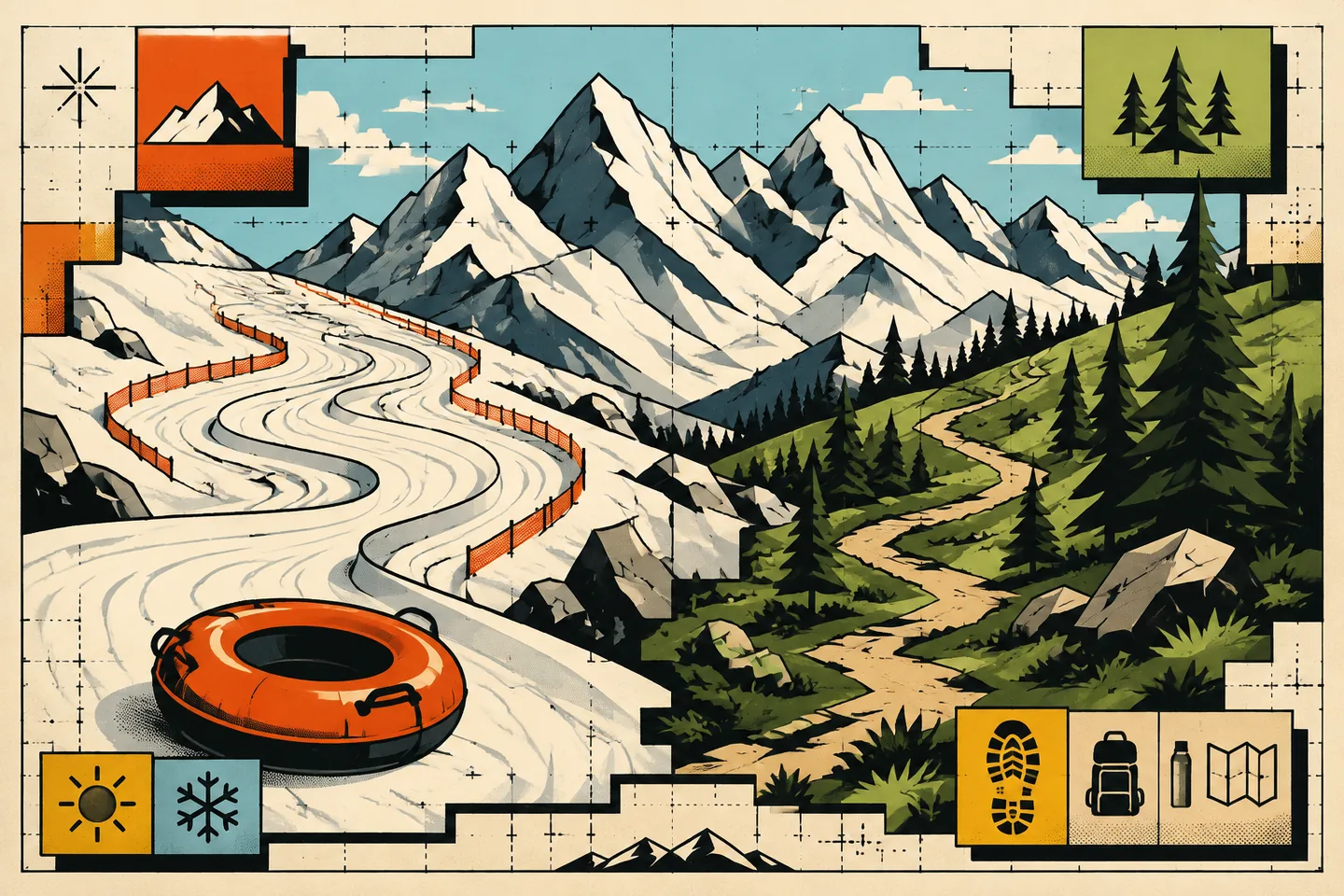
A Colorado adventure park outing might centre on a tubing hill, a managed outdoor activity or a self-guided trail. These experiences need different preparation. Before choosing a destination, decide how much structure your group wants, how long everyone can comfortably spend outdoors and whether non-participants need somewhere to wait.
A managed tubing destination may suit visitors seeking a defined activity, while a public trail offers more freedom over distance and pace. Start with those differences rather than trying to fit several activities into one day. Then check the season, access and participation requirements for the specific place you intend to visit.
Choose an activity that fits the group
A purpose-built attraction may provide equipment, marked activity areas and staff instructions. Check what is supplied and what participants must bring. Do not assume that one venue's arrangements apply elsewhere, or that an activity described as suitable for families will work for every child.
For tubing, establish any age, height and supervision requirements before making plans. Ask whether children ride independently or with an adult, how riders reach the start and what happens if someone wants to stop. These practical details matter more than a general description of the experience as easy or exciting.
A trail outing puts more decisions in your hands. Distance alone is not enough to judge a route: consider gradient, surface, elevation gain and the return journey. The state's trail guidance provides a starting point for understanding hiking, cycling and horse-riding opportunities. Follow this with the relevant land manager's route information and notices.
Choose for the least confident participant as well as the keenest. A short outing with an obvious stopping point can be easier to manage than a route where turning back separates the group. Agree beforehand whether everyone will stay together or whether separate activities are practical.
Check conditions and access
Plan around the conditions at the destination, not just the weather where you are staying. Check the forecast, operating information and access notices before leaving. A seasonal description cannot tell you whether an activity is running on your chosen day or whether the approach road is affected by a closure.
Review the whole journey, including parking and the walk to the activity area. Snow, rain or uneven ground may make that last section more demanding than expected. Allow time to find the entrance, use the toilets, change clothing and receive instructions without rushing.
Keep an alternative that genuinely reduces the demands of the day. Another exposed trail is not a useful fallback when poor weather affects the area. A shorter permitted route, an indoor activity or postponing the outing may be more appropriate. Decide on your alternative before travelling, while you can still compare options calmly.
Dress for the activity
For snow activities, choose layers that can be adjusted, gloves and footwear suited to cold, wet ground. Consider how clothing will feel while waiting as well as while moving. Keep spare dry items available where practical, especially for children who may become uncomfortable before the planned session ends.
For warmer-weather outings, check footwear requirements and bring layers and rain protection appropriate to the forecast. Avoid choosing clothing solely because the calendar says summer. The Care for Colorado guidance covers preparation and responsible recreation, including attention to conditions and suitable outdoor equipment.
Arrange a secure place for phones, keys and other loose items before an activity begins. Ask where bags can go rather than assuming storage is available. Keep essential items accessible to the person who needs them, particularly if participants and spectators will spend part of the visit apart.
Confirm accessibility in practical terms
An accessible destination needs to work from arrival to departure. Ask about the surface and gradient between parking, toilets, waiting areas and the activity itself. A short route can still present difficulties if it includes steps, loose gravel or a steep section.
For an activity involving specialist equipment, confirm how participants get into and out of it and what assistance is available. If adaptive equipment is mentioned, ask about availability and the arrangements for using it. Do not build the day around an unconfirmed facility.
Consider people who will watch rather than participate. Check whether they can reach a viewing area, sit down and find shelter if needed. Agree where the group will reunite, and make sure the return to the vehicle does not depend on everyone finishing at the same time.
Match supplies to the outing
A managed activity and a remote walk call for different preparations. For either, take water, suitable clothing and what your group needs during travel and waiting time. Check food and drink arrangements rather than assuming refreshments will be available at the destination.
For a self-guided trail, carry route information and navigation that you can use without relying entirely on reception. Check permitted uses, dog restrictions and seasonal access with the land manager. A line on a digital map does not establish that a route is open, suitable or legally accessible.
Allow for the return leg when judging time and effort. Identify places where you could shorten the walk, and agree when to turn back. If heading away from busy areas, leave your route and expected return details with someone who is not joining you. Update them if the plan changes.
Follow instructions and share space
At a managed attraction, listen to the activity briefing even if you have tried something similar elsewhere. Clarify anything you do not understand before starting. Follow staff directions about riding, stopping, leaving the activity area and keeping spectators clear of moving equipment.
On shared trails, watch for other users and follow posted rules. Make your approach known politely when passing, allow space and avoid startling horses. Keep the group from blocking the route during breaks. Choose a permitted stopping place where others can pass without stepping onto fragile ground.
Observe wildlife without approaching, chasing or feeding it. Keep food and waste under control, and follow local storage requirements. Children should understand these expectations before an encounter occurs; a quiet reminder at the start is easier than trying to explain the rules in the moment.
Respect boundaries and leave no waste
Open-looking land is not necessarily open to visitors. The Colorado Natural Areas Program explains that designated areas can be on public or private land, with access dependent on ownership and site management. Check permission and use the recognised entrance rather than treating a designation as an invitation to explore freely.
Stay on established routes and obey closures. Leave plants, rocks and other natural or cultural objects where they are. If a route is unsuitable, choose another permitted option rather than widening the trail or crossing a boundary to get around the problem.
Take rubbish away when bins are unavailable, including food scraps and small packaging. Before leaving a stopping place, check beneath seats and around bags. Build this into the departure routine so that clearing up does not depend on one person remembering after everyone has moved on.
Before leaving home
- Confirm the activity, participation requirements and equipment arrangements.
- Check the destination's forecast, access notices and operating information.
- Verify parking, toilets, accessibility and arrangements for non-participants.
- Pack for the activity, waiting time and return journey.
- Agree on a meeting place, stopping time and realistic alternative.