

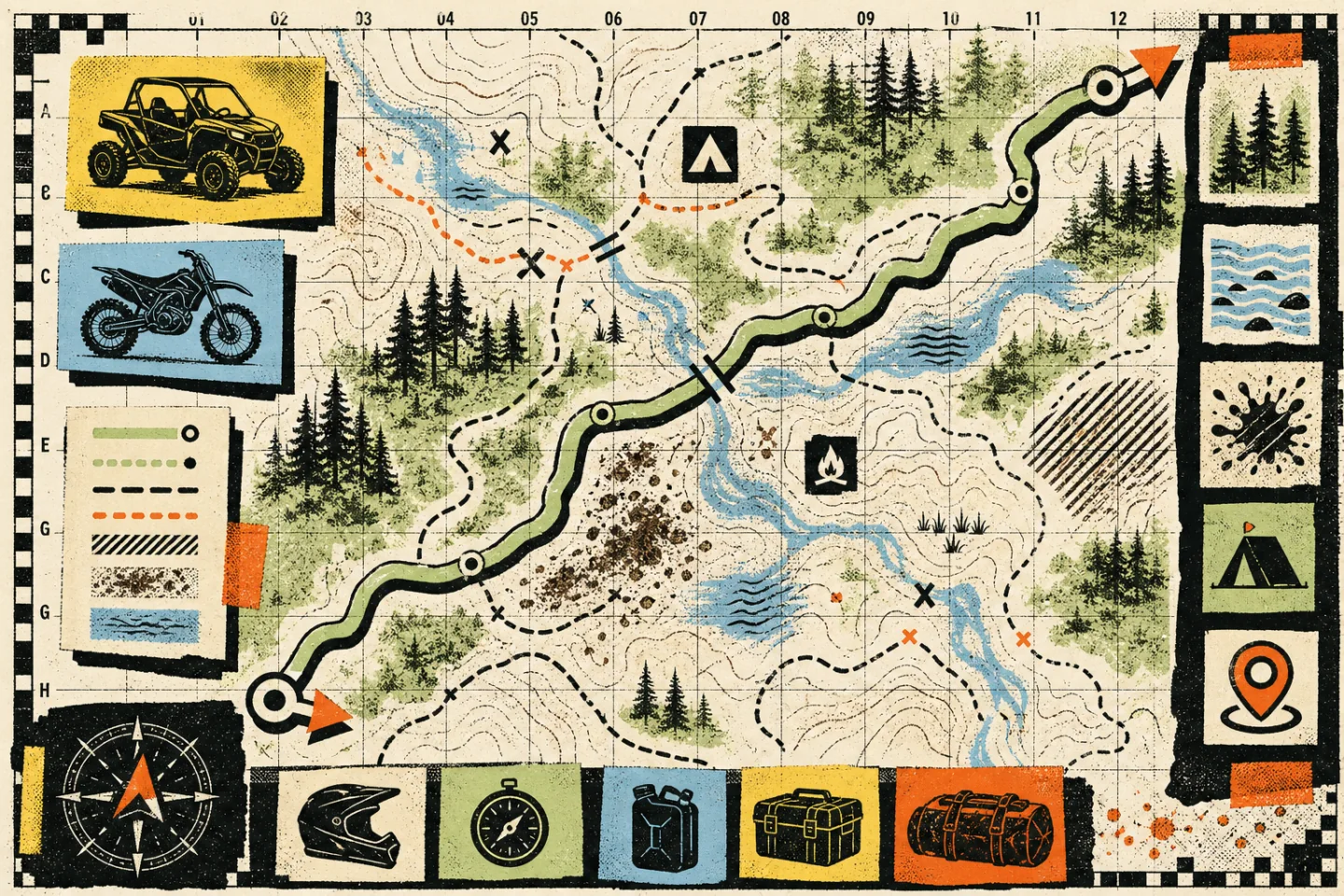
The off-road riding destination covered here is near Winnsboro, South Carolina. A useful visit starts with practical questions: which vehicles may enter, which trails suit each rider, what equipment is required and how weather may affect the ground. The Town of Winnsboro’s park listing provides a concise overview of the setting and its main riding features.
This guide focuses on preparation rather than changing details such as prices, opening hours or event dates. Check those directly with the venue before travelling. Conditions and access rules can change, and a plan made from an old listing may be wrong on the day.
Decide what sort of visit you want
Begin with the length and purpose of the trip. A day ride needs a different packing list from an overnight stay, while a mixed group needs more coordination than two experienced riders using similar machines. Agree whether the priority is gentle trail riding, technical terrain, mud, practice or simply spending time outdoors.
List every rider, passenger and vehicle. Note each person’s experience, any young riders, who will carry tools and first-aid supplies, and whether anyone needs hired equipment. Do not assume that a road-legal vehicle is suitable for an off-road park. Confirm the accepted vehicle categories and any age, supervision, passenger or equipment rules before setting out.
Choose a realistic arrival and departure time. Allow for unloading, registration, safety checks and finding the trail entrance. If the group is camping, leave enough daylight to set up before riding. A rushed first hour often leads to missed checks and poorly chosen routes.
Match the route to the least experienced rider
Trail ratings are a starting point, not a guarantee of easy ground. Rain, repeated traffic and maintenance can turn a familiar section into mud, ruts or exposed roots. Public trail guidance may explain the local rating system and give riders a useful reference before arrival, but the signs on site take priority.
New riders should begin on the easiest available route and practise braking, turning, controlled acceleration and stopping on a slope before moving to harder terrain. An experienced rider should lead at a pace that leaves the whole group comfortable. Another confident rider should stay at the back so nobody becomes separated.
At each junction, the lead rider should wait until the next rider has seen the turn. Agree on meeting points in case the group splits up, and carry a paper map or an offline copy. Mobile reception and battery life should never be the only means of finding the way back.
Inspect an obstacle from a safe stopping place before committing to it. Look for a clear line, an exit route and enough room beyond the obstacle for the next rider. Do not stop on a blind bend, at the bottom of a steep descent or in the middle of a narrow trail.
Prepare the vehicle before loading it
A home inspection is easier than a repair beside the trail. Check tyres for damage and suitable pressure, then inspect brakes, steering, lights, controls and visible fasteners. Confirm that the machine has enough fuel for the planned ride and that any battery is charged. Secure loose items so they cannot fall into moving parts or onto the trail.
Carry only tools and spares that the group knows how to use. A compact kit might include a tyre repair method, inflation tool, tow strap and the correct basic hand tools for the machine. Recovery points must be suitable for towing; attaching a strap to an uncertain part can create another hazard.
Inspect trailers and tow vehicles as carefully as the off-road machines. Check tyres, lights, couplings and tie-downs. After a short drive, stop somewhere safe and check the load again. Muddy equipment should also be secured for the return journey rather than left to shift inside a trailer.
Wear equipment for the fall, not the forecast
A properly fitted helmet, eye protection, gloves, sturdy over-the-ankle boots, long sleeves and durable trousers form a sensible minimum for off-road riding. Use the restraints supplied for passengers, and keep hands, arms and legs inside enclosed vehicles. Replace damaged protective equipment rather than relying on it for another trip.
Pack for dust, mud, heat, rain and sudden changes in temperature. Bring drinking water, food, sun protection and a dry layer. A charged phone, portable battery, torch and whistle are useful even on a day visit. Carry personal medicines in a protected, accessible container.
A first-aid kit should be easy to reach, not buried beneath camping gear. At least one person should know how to use it and how to contact emergency help. Before riding, identify the venue’s check-in point, emergency procedure and the clearest way to describe the group’s location.
Use calm trail etiquette
Ride at a speed that leaves time to react to oncoming traffic, stopped vehicles, wildlife and changing ground. Slow down before blind corners and trail crossings. Leave more space in dust, mud or poor light, and never pressure another rider to attempt an obstacle or pace beyond their ability.
Stay on open, designated routes. A closure may protect riders from damaged ground or active maintenance, even when the trail looks passable. Avoid spinning tyres unnecessarily, cutting corners or creating new tracks around puddles. Responsible use helps limit erosion and keeps traffic predictable.
Yield when the safer course is obvious, and communicate before passing. If the group stops, move completely clear of the travelled line where possible. Nobody should ride while impaired, and tired riders should return before concentration fails. The South Carolina Department of Parks, Recreation & Tourism is a useful starting point for wider visitor information in the state.
Plan food, rest and an overnight stay
For a full day, schedule breaks before people become tired or dehydrated. Choose a fixed place and time for lunch so riders who separate can rejoin the group. Keep food and rubbish sealed, and take all waste back to the appropriate disposal point.
Overnight visitors should confirm the type of pitch or accommodation, vehicle access, check-in arrangements and permitted equipment. Ask about water, electricity, fires, pets and quiet hours rather than assuming that one camping area follows another’s rules. Keep fuel and hot equipment away from sleeping areas.
Groups should share essential information before leaving home: arrival time, booking reference if one exists, vehicle list, emergency contacts and who is bringing communal equipment. One written checklist prevents duplicate tools while ensuring that water, shelter and recovery gear are not forgotten.
Allow for weather and changing conditions
Check the forecast shortly before departure, but prepare for conditions to differ on site. Heavy rain may affect low ground and crossings; dry weather may increase dust and reduce visibility. Cold or wet riders lose concentration quickly, so carry a spare layer even when the morning is mild.
After rain, approach standing water slowly and do not assume its depth or base is safe. Watch another vehicle only if it is comparable to yours; a route that suits one machine may not suit another. If the group cannot inspect a feature or recover safely from a failed attempt, turn around.
Finish the ride with enough daylight for loading and inspection. Look for damage, leaks and loose parts, and clean lights and number plates before travelling on public roads. Record any problem that needs repair so it is not forgotten before the next outing.
Make room for a non-riding day
Not every member of a group will want to ride all day, and severe weather may change the plan. Winnsboro can provide a practical base for supplies and a quieter break from the trail. Check travel times rather than assuming nearby places are within walking distance.
For a separate outdoor outing, South Carolina State Parks gives current information about Poinsett State Park. Treat it as a different trip: check access, weather and activity guidance independently instead of carrying over assumptions from the off-road venue.
A final pre-departure check
- Confirm the venue is open and the planned vehicle and riders are permitted.
- Check current trail conditions, weather and any closures.
- Inspect the machine, trailer, restraints and tie-downs.
- Pack helmets, eye protection, boots, water, food and weather layers.
- Carry a map, charged phone, first-aid kit, tools and recovery equipment.
- Agree on route difficulty, group order, meeting points and return time.
- Leave enough daylight for unloading, riding, inspection and loading.
A good off-road visit depends less on covering every trail than on making sound decisions throughout the day. Start conservatively, keep the group together and change the plan when the ground, weather or a rider’s energy calls for it.